We’re taking ECan to the Court of Appeal over a Canterbury nitrogen pollution consent
From September 23-24 we’ll be in the Court of Appeal challenging a major Canterbury nitrogen pollution consent after the High Court found the consent to be unlawful.
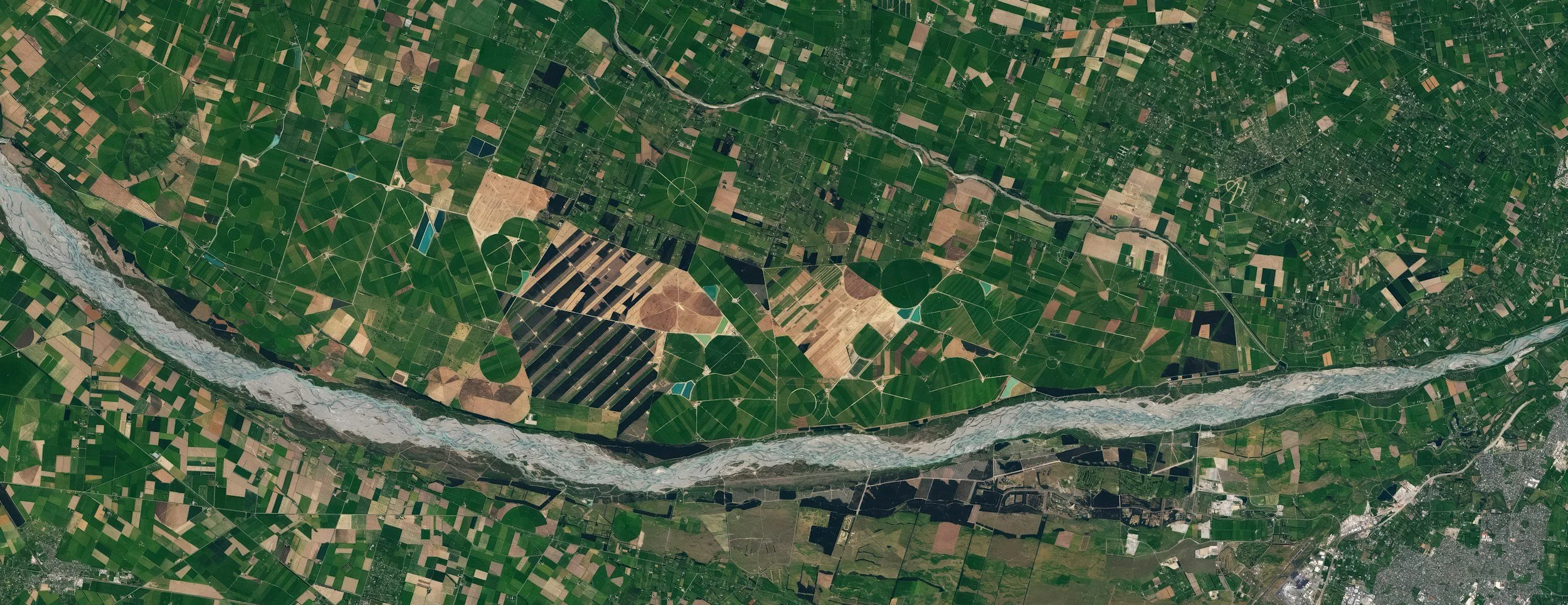
The Court of Appeal will hear our challenge to a major nitrogen pollution consent in Canterbury after the High Court found that Environment Canterbury acted unlawfully when granting the consent.
The appeal will be heard on 23 and 24 September and concerns a 10-year consent granted to MHV Water Ltd covering approximately 138,000 hectares between the Hakatere and Rangitata rivers.
The consent allows farms within the scheme to discharge excess nitrogen from agricultural activities, which can leach into groundwater and ultimately reach streams, rivers, and the coastal environment.
In its earlier decision, the High Court found that Environment Canterbury had made a material error of law when granting the consent, breaching section 107 of the Resource Management Act (RMA). However, the Court declined to overturn the consent after changes to section 107 were made by the Government.
ELI is appealing that decision, arguing that the High Court should have required the unlawful consent to be revisited.
At the time the consent was granted, section 107 provided minimum legal protections against certain forms of water pollution, unless specific statutory exceptions applied.
“This consent allows a huge amount of nitrate into local waterways, right in the middle of a council-declared nitrate emergency,” says ELI Senior Researcher Anna Sintenie.
“The High Court confirmed that the consent was granted unlawfully. We believe that should have consequences. An unlawful consent should not simply be allowed to stand. We are arguing that the consent should be revisited.”
The case comes amid ongoing concerns about nitrate contamination in Canterbury. Environment Canterbury monitoring continues to show elevated and increasing nitrate levels, while the recent permitting of at least 57,000 additional dairy cows is expected to place further pressure on freshwater ecosystems.
Previous Environment Canterbury analysis estimated that 62 per cent of private drinking water wells in the MHV scheme area could exceed the maximum acceptable value for nitrate, with more at risk.
“We don’t believe managing nitrogen pollution properly is beyond Environment Canterbury’s abilities,” says Sintenie.
“Local communities and ecosystems deserve better stewardship. We are talking about excess nitrogen — a waste product of agricultural production. There is no good reason to accept levels of nitrogen discharge that put our freshwater and drinking water at risk.”
The appeal also raises broader questions about the consequences of unlawful resource consents at a time when the Government is changing New Zealand’s resource management and freshwater laws.
“One of the central questions before the Court of Appeal is what should happen when a court finds that a council has breached the law that applied when a consent was granted.”
“Environment Canterbury’s approach to nitrogen discharges has had serious consequences for Canterbury’s freshwater. It is not too late to turn this around, but it requires much greater scrutiny of the permits that allow nitrogen pollution.”
“The Government should be supporting councils to put strong protections in place, rather than weakening environmental safeguards while communities continue to deal with the consequences of freshwater contamination.”