From 27–29 October, the High Court will hear our challenge against the Minister for Oceans and Fisheries regarding protections for Māui and Hector’s dolphins.
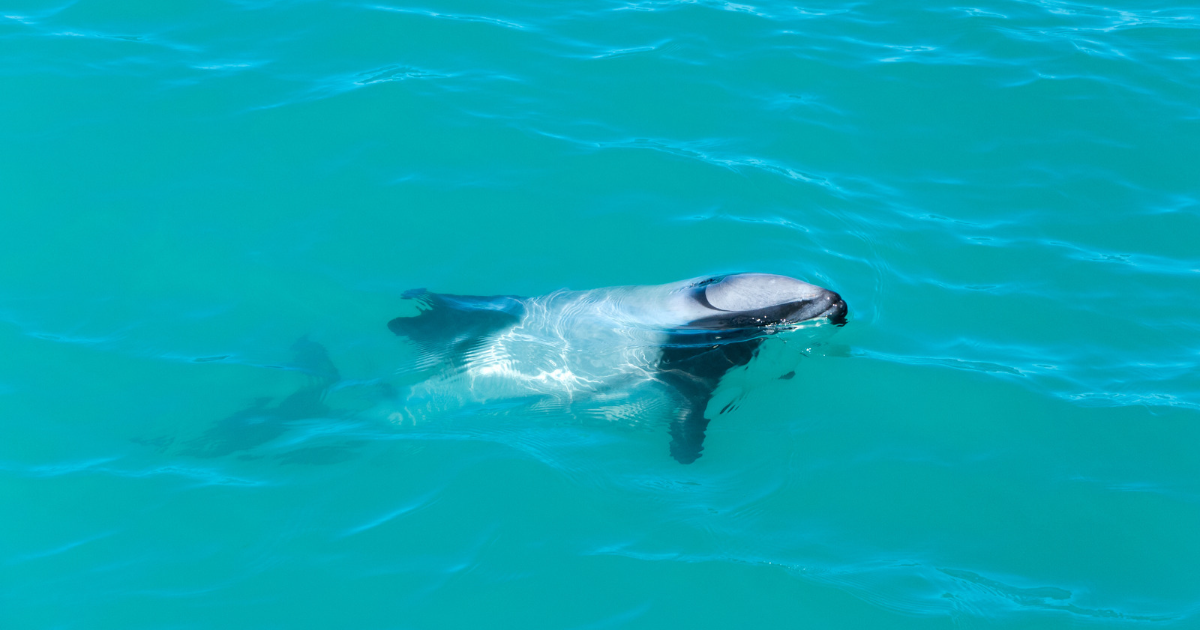
ELI is challenging the government’s Hector’s and Māui Dolphin Threat Management Plan (the Plan), arguing that its protections fall short of what the law requires to prevent the dolphins from being killed by fishing.
“With so few Māui dolphins left, the Plan must provide effective protection against fishing-related deaths,” says ELI Senior Legal Advisor Megan Cornforth-Camden.
Māui and Hector’s dolphins were once the most common dolphins in New Zealand waters. Now an estimated 54 Māui dolphins over one year of age remain. The Hector’s dolphin is also vulnerable, with an estimated population of around 15,000.
“If we want these dolphins to remain in our waters for future generations, we need a credible plan. Fisheries law is clear. The Fisheries Act requires the Minister to ensure sustainability, including by avoiding, remedying or mitigating the adverse effects of fishing.”
Deaths within marine mammal sanctuaries
The case comes amid growing concerns about fishing-related deaths within marine mammal sanctuaries.
Using data obtained under the Official Information Act, ELI identified 27 reported Hector’s dolphin bycatch deaths in marine mammal sanctuaries since 2022. That represents 27 of a total of 30 reported Hector’s dolphin bycatch deaths over the same period.
Ninety percent of reported Hector’s dolphin bycatch deaths since 2022 have occurred in marine mammal sanctuaries. “It’s hard to believe. These are places intended to protect dolphins, yet that’s not what’s happening,” says Cornforth-Camden.
Three key issues with the Threat Management Plan
ELI alleges that the Plan falls short of what the law requires in three key respects:
The fishing-related mortality limit covers too narrow an area
The limit is intended to trigger action if a Māui dolphin is killed by fishing, but it does not cover all known Māui dolphin habitat. If a dolphin were killed outside the designated area, the limit would not apply.
Monitoring gaps make fishing-related deaths difficult to detect
Set-net fishing and trawling continue in parts of the Māui dolphin habitat zone, but some set-net vessels do not carry cameras. This limits the ability to monitor fishing activity and determine whether the mortality limit is being implemented effectively.
The trawl closure does not cover the full extent of Māui dolphin habitat
Trawling is prohibited up to four nautical miles off the coast in the main habitat area, but Māui dolphins have been detected further offshore.
“The government hasn’t done all it can to prevent these dolphins from going extinct. With such low numbers left, we must get this right,” says Cornforth-Camden.