
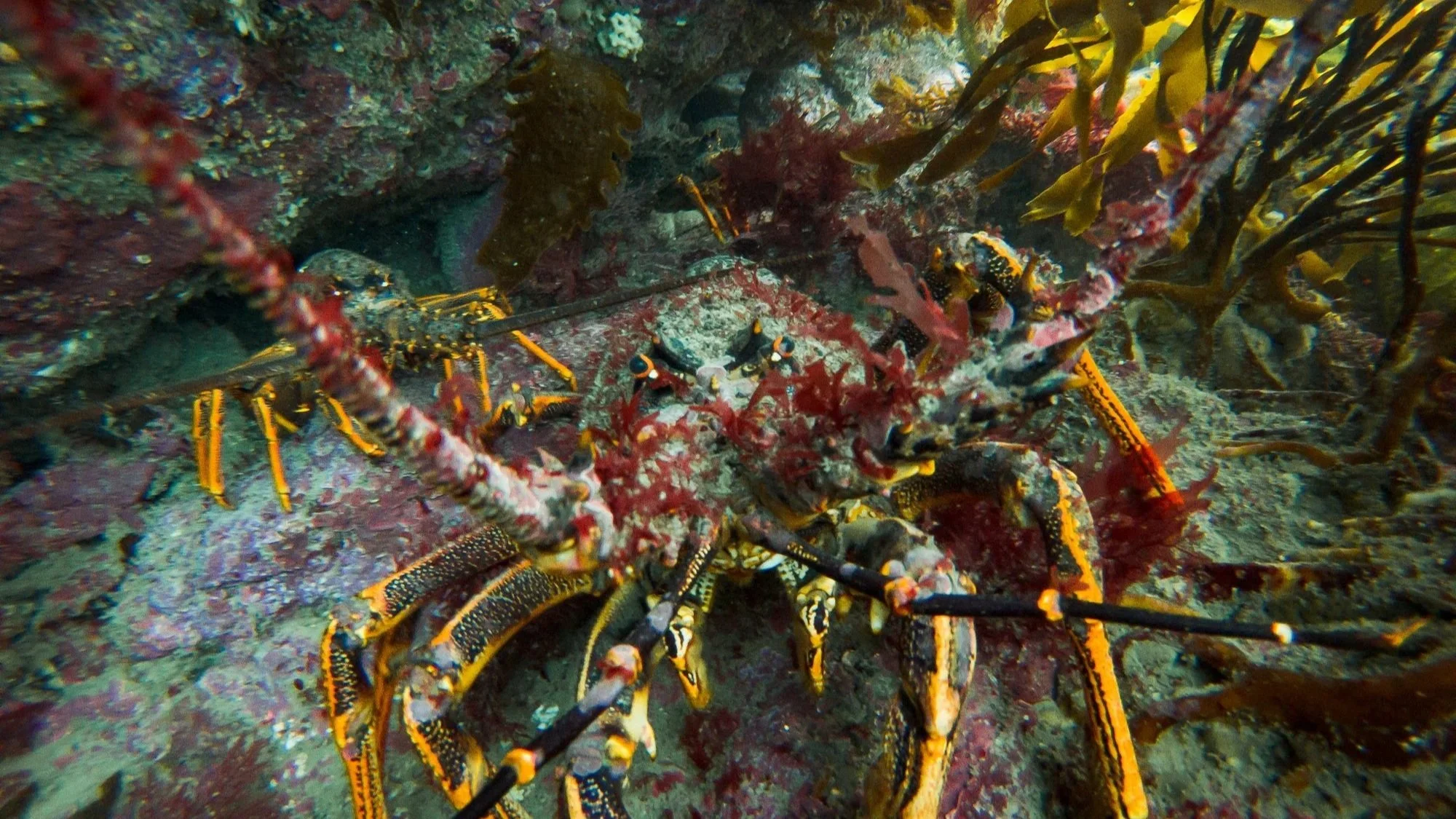
The Environmental Law Initiative (ELI) welcomes today’s announcement of a significant closure of the Northland spiny rock lobster (kōura) fishery, a long‑overdue response to the ecological crisis unfolding across northeast Northland.
ELI’s Legal Advisor, Reto Blattner de-Vries, says “The announcement is an important acknowledgement that strong action is required to allow the Northland crayfish fishery to recover.
Minister Shane Jones’ announcement will extend the CRA 1 closure from Ohao Point to Cape Rodney, reduce recreational limits to two rock lobsters per person per day, and impose additional closures in the outer Hauraki Gulf within CRA 2. The changes take effect 1 April 2026.
“These closures reinforce exactly what we’ve been saying in court: when stocks are so depleted that ecosystems begin to fail, the Minister is legally required to act,” Blattner de-Vries says.
The closure comes against the backdrop of two successful legal challenges by ELI against Ministerial decisions setting crayfish catch limits.
Blattner de-Vries, says, “For years, successive Ministers ignored clear scientific warnings.”
In its most recent High Court case, ELI argued that the Minister of Oceans and Fisheries was required by law to make decisions that avoid, remedy and mitigate the adverse ecological effects of fishing. This was especially the case where species like rock lobster play a keystone role in controlling kina and preventing widespread kelp forest collapse.
Fisheries New Zealand recently released a study, which shows kina barrens now cover huge coastal areas, including more than a third of habitat on the east coast of Northland.
ELI’s two High Court cases have helped expose the failures of the Crown to act, compelling it to recognise that significant action is required, including large scale closures, to address the kina barren crisis.
Marine scientists have warned that kōura on Northland’s east coast are heavily overfished. Even under full fishing closures recovery could take decades, depending on larval settlement conditions and warming seas.
“For this closure to succeed, it must be underpinned by rigorous, transparent ecosystem monitoring and remain in place for as long as science tells us it is necessary. That is likely to mean many years, not just a couple of seasons,” says Blattner de-Vries.
While today’s announcement includes a significant closure, ELI recently wrote to the Minister requesting urgent action on the outer Hauraki Gulf portion of CRA 2, where ecological decline mirrors Northland, and where rock lobster have previously been described as “functionally extinct”.
“Without addressing the outer Gulf, we risk simply shifting the pressure and perpetuating collapse.”
“Today’s decision shows the Government now recognises the scale of ecological harm and the need for structural change. They’ve come a long way, and yet we still have a long way to go until kelp forests and kōura populations are restored,” says Blattner de-Vries.